WORKSHOP ORGANIZED
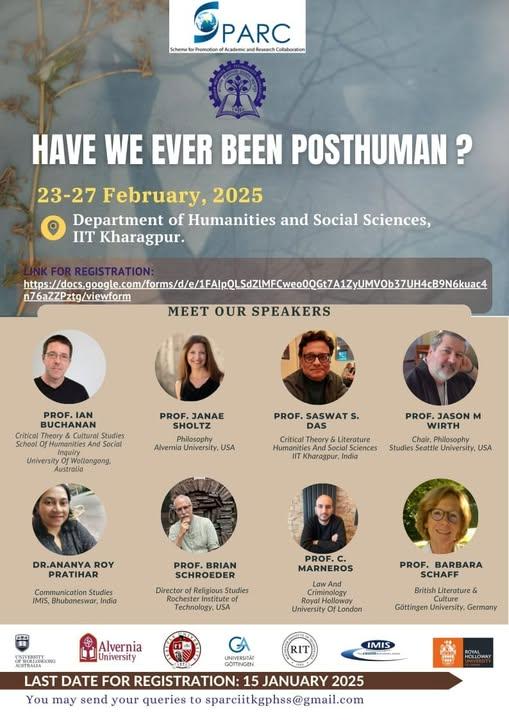
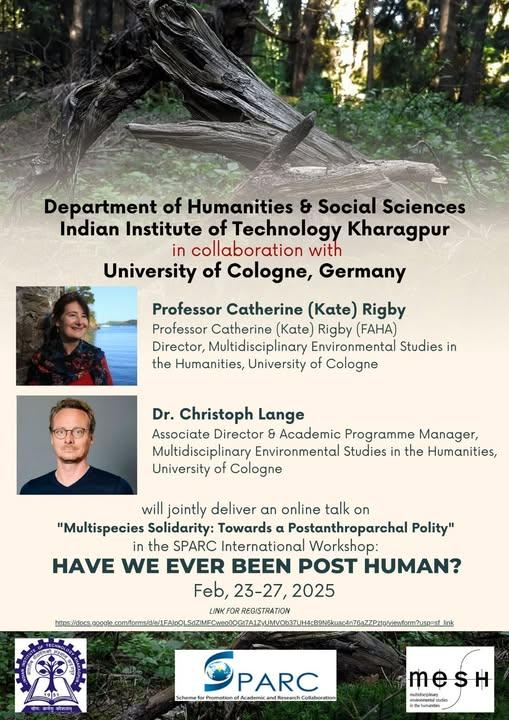
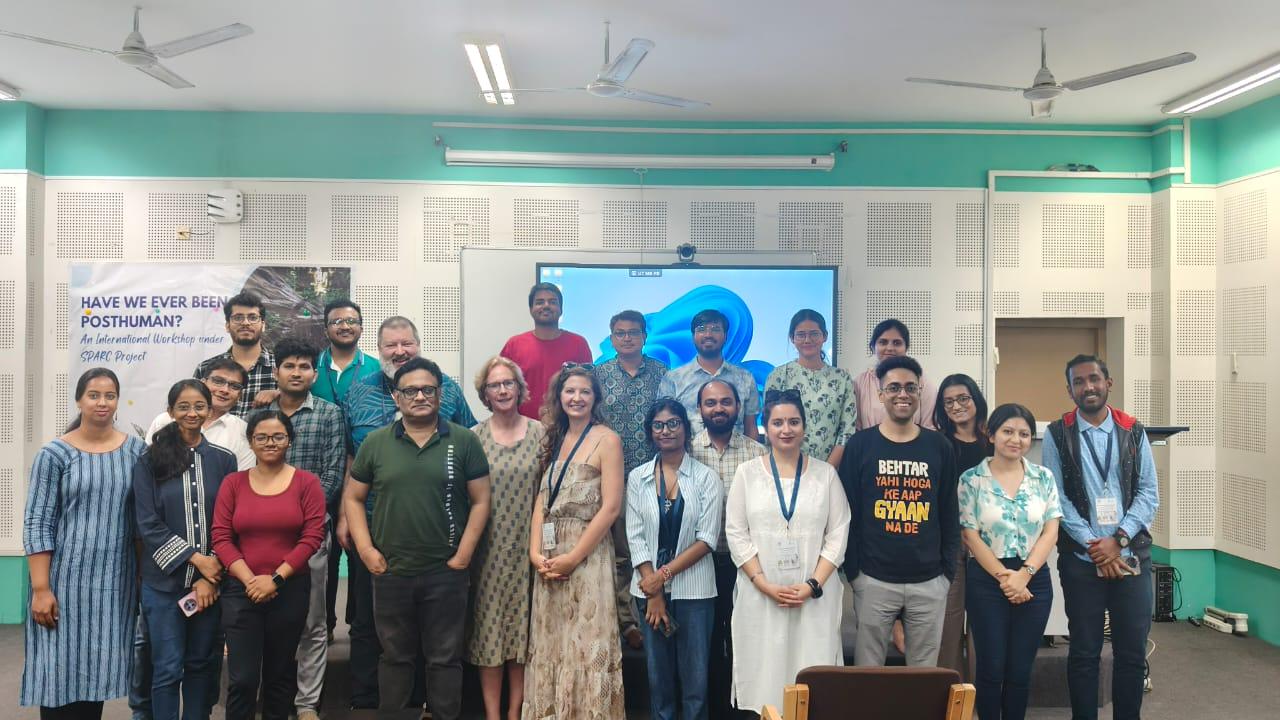
SPARC International workshop:
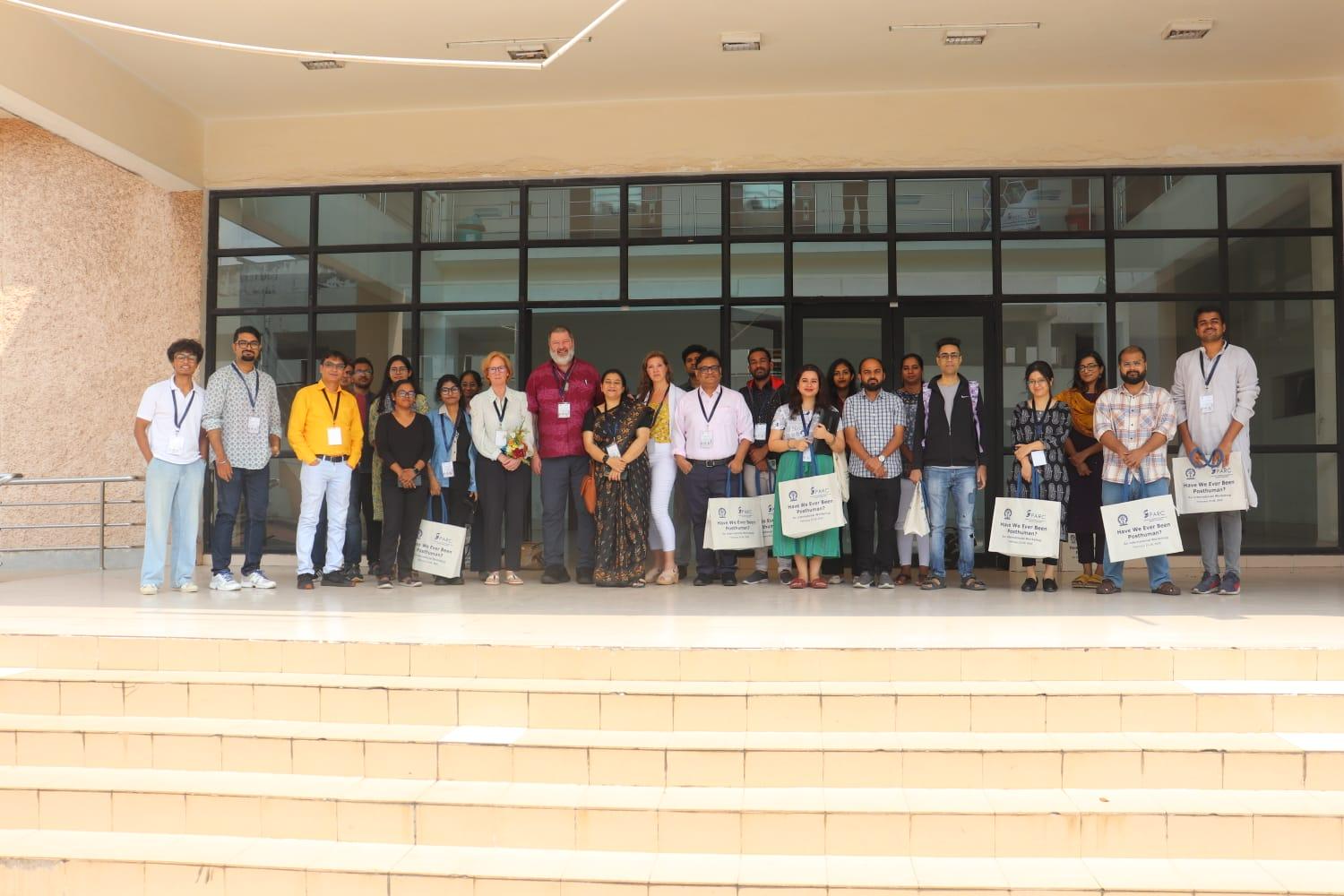
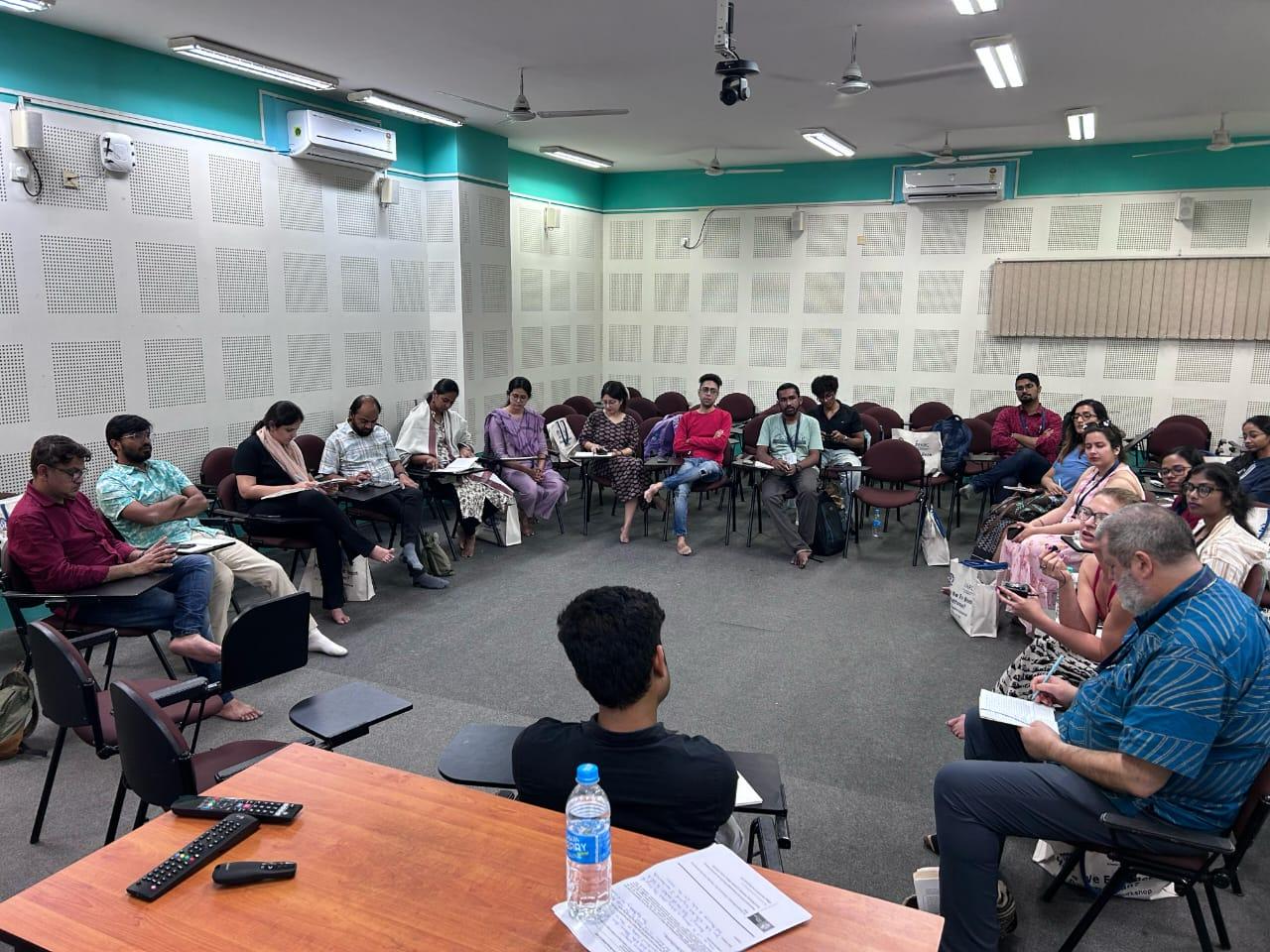
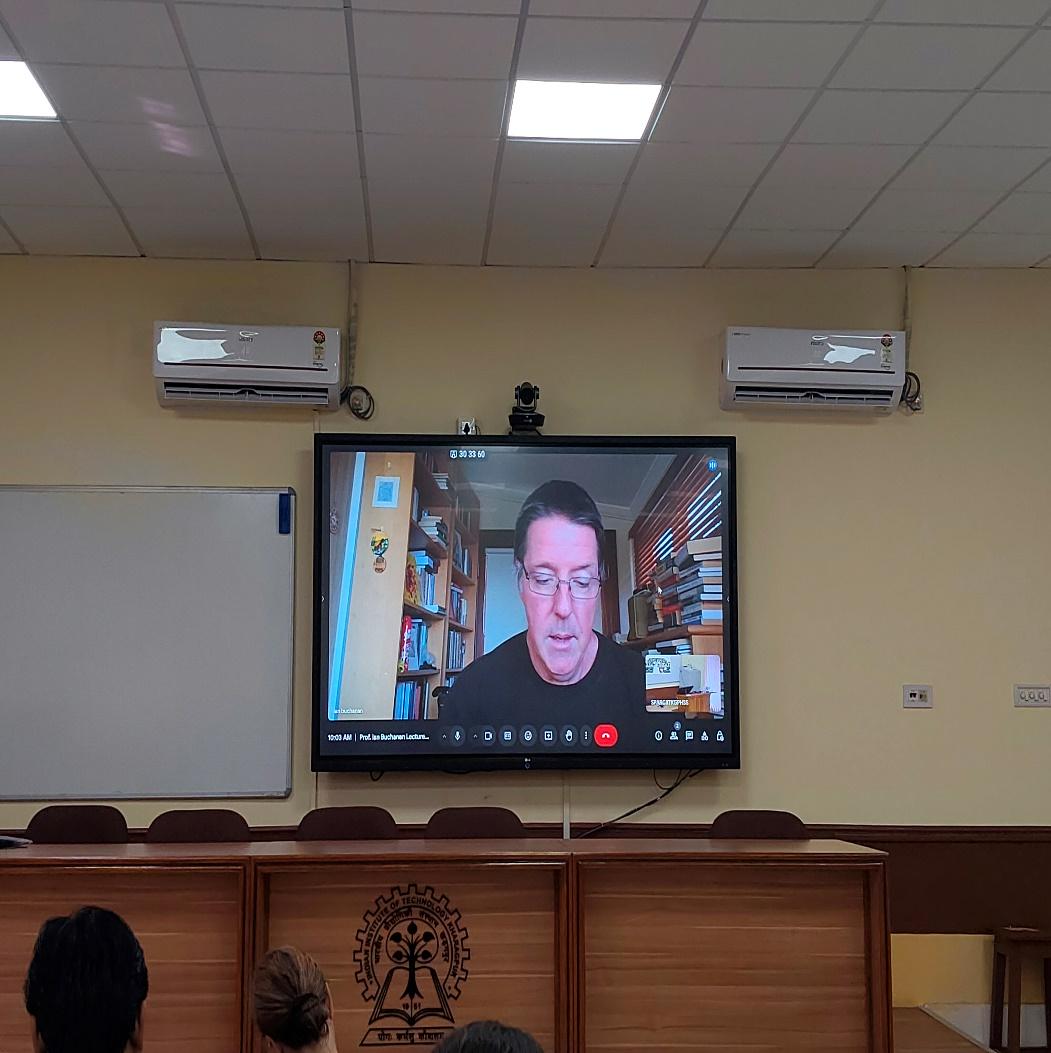
"Have we ever been Post human? (February 23rd to 27th, 2025)
Ongoing SPARC Project, 2025-26: Post-humanism, Post-Colonialism & Environment
-
1. SPARC Project Theme
-
2. SPARC Project Background & Motivation
-
3. SPARC PROJECT Proposal Outline
-
4. Outline of the first International Workshop held under the SPARC Project
- a. International Workshop Theme: Have you ever been Post-human?
- b. Synopsis of Lectures/talks delivered in the Workshop
Abstract
Environment and ecological crises have become the most discussed and debated issues of our contemporary world. The beginning of a new geological epoch, the Anthropocene, which marks an irretrievable degradation of ecological systems due to the parthenogenic human intrusion into the environment, has furthered the efforts to better address and impede such crises. This project joins the fray from a posthuman perspective, by connecting the posthuman and the environment, and situating itself in the postcolonial. Such a precise theoretical parallax view would necessitate diverse perspectives which encounter postcolonial, developing economies. While posthumanism allows us to interrogate human-centered development and human-centered philosophies, it also draws attention to not only the overwhelming dependency of humanity on technology, but also of the interconnectedness of different biological species and inorganic matter. Such an ethical break with our contemporaneous anthropocentric past is an absolute necessity if we are to engage with and assuage the looming ecological catastrophes. This project positions itself in the postcolonial socio-political and economic milieu precisely because the brunt of ecological catastrophes is born by similar countries, which are also partially deprived of advanced techno-scientific developments and ensuing knowledge production. Therefore, this project proposes an inception of the posthuman turn in postcolonial ecologies like India, and an examination of the affects of the Anthropocene on the postcolonial world. The project will critically theorize the concepts of postcolonialism, posthumanism and environment, and philosophize the interconnectedness between these concepts to derive a refreshed problematic which the Humanities as an academic discipline demands.
Keywords
• Postcolonialism
• Posthumanism
• Posthuman turn
• Environment
• Ecology
• The Anthropocene
• Interconnectedness
• Positionality
Lecture 1:
Posthuman Bodies and Gender
Prof. Dr. Barbara Schaff, Georg-August-University Göttingen
In this lecture, I will look at the evolving concept of the posthuman body, focusing on how technological, biological, and cultural transformations challenge traditional boundaries of the human form and how they are represented in contemporary British literature. As advancements in biotechnology, cybernetics, and artificial intelligence blur the distinctions between human, machine, and non-human entities, the posthuman body emerges as a dynamic site for reimagining identity, gender, agency, and embodiment. How do these developments reshape our understanding of what it means to be human, with particular attention to the ethical, philosophical, and social implications of augmenting or transcending the biological body? And how do fictional texts imagine the posthuman body and to what end? And lastly, is the category of gender still a valid and epistemologically important one when conceptualising the posthuman body? Drawing on the work of scholars such as Katherine Hayles, Giorgio Agamben, and Rosi BraidoI, I will ask how these transformaJons disrupt convenJonal understandings of the human subject. Ultimately, I will consider the ways in which literary and filmic representations of the gendered posthuman body challenge and redefine our notions of vulnerability, freedom, and existence in a rapidly changing world.
Texts: Kazuo Ishiguro, Never Let Me Go, London 2005; Ian McEwan, Machines Like Me,
London 2019;
Film: Ex Machina (Dir. Alex Garland), 2015
Lecture 2:
Posthuman / More-than-Human Kinship
In the 21st century tradiJonal concepts of kinship based on genealogy, blood and gender
have been contested and problemaJsed in the light of biotechnological developments,
reformed marriage laws, mass migraJon and transcultural alliances. A growing awareness of
the interconnecJon of all organisms, human and non-human on an endangered planet
helped to formulate kinship concepts that were disjoined from biological ties.
This lecture will explore the transformaJve concepts of posthumanist and more-than-human
kinship, drawing on the theoreJcal frameworks established by Donna Haraway, Rosi
BraidoI, Anna Tsing, and others. I will discuss the implicaJons of redefining kinship beyond
tradiJonal human-centered paradigms, emphasizing the interconnectedness of all living
beings and the entangled relaJonships that shape our existence. This inquiry invites
parJcipants to reflect on the ethical and poliJcal dimensions of our relaJonships with the
more-than-human world, encouraging a reimagining of kinship that fosters solidarity and
responsibility across species.
By examining Haraway’s and BraidoI's noJon of the posthuman, and by comparing three
contemporary literary examples of narraJves taking a more-than-human perspecJve, I will
ask how they transcend anthropocentrism and advocate for a more inclusive understanding
of kinship that embraces non-human enJJes as integral to our ecological and social fabric. At
the same Jme, these texts call for a criJcal analysis of the literary formats of more-than-
human-kinship narraJves and their literary strategies such as narraJve perspecJves and
voice. Whose voice is it anyway that is speaking in these narraJves?
Texts: Kazuo Texts: Sara Baume, A Line Made by Walking,
London 2017; Amitav Gosh,
The Living Mountain
(2022); Kapka Kassabova,
Elixir: In the Valley at the End of Time (2023).
Lecture 3:
Background and Motivation
Progress and production have come to define the contemporary age as one of great techno-scientific advancements, which in-turn have compelled humanity to live in a posthuman age of machinic possibilities. The same logic has landed us in an ecological epoch called the Anthropocene, which is to say the price for Progress has been the irreversible loss of autonomy of the environment, and the ensuing ecological crises. However, the burden of catastrophe and preventive measures are doubled in postcolonial, growing economies like India. Caught between the desire for development and environmental sustainability, India has languished to shed her colonial past and rejuvenate her pre-colonial ecosystems. NASA, using its global imaging, revealed that India, along with China, had increased the world green cover to match that of the Amazon rainforests. Nonetheless, unpredictable monsoon rains and flashfloods in Kerala and Nagaland, hurricanes and sea erosion in Odisha, and draught in Tamil Nadu have taught us that only a collective, unified effort of all world nations can combat climate change, which is also why the recent Amazon fires drew the ire of world leaders. The coming together of global powers and a shift in perspective from individual nation states to citizens of Spaceship Earth requires rigorous interrogations and altercations of contemporaneous ethical and cognitive standards. This unique situation necessitates the Humanities, which theorizes human activities, to move forward by addressing and communicating with these changes and possibilities, particularly their impact on and consequences for human perception and pedagogy.
Lecture 4:
Have We Ever Been Posthuman Concept Note
Post-humanism has come to encompass many fields and schools of thought such as new materialism, transhumanism, bioethics, techno- and cyber-feminisms, Deleuzian philosophy, cybernetics, technology, and environmental and Anthropocene studies. Posthumanism suggests the urgency of the need to redefine the human and deconstruct key assumptions of the humanist tradition - challenging the centrality of the human in research, the prioritization of reason and the implication of human exceptionalism that is built into the foundation of how humanists and post-enlightenment thinkers have characterized the relations between humans and animals, the human and inhuman, as well as subject and object, and nature and technology.
But, as the title of our conference suggests, we must ask, have we ever been posthuman? – or more accurate to its Latourian nod, we might entertain the thought that we have never been posthuman, or can never be. This conference takes a critical approach to posthumanism, not necessarily to deny the power of its critiques, far from it. But to ask ourselves to what extent these priorities have truly impacted our theorizing and our practice and if decentering the human is in fact all that it is cut out to be. Can we ever solve human-generated problems without centering the human? Given the diffusiveness of posthumanism, have we ever really met its demands or are we awash in conceptual platitudes that leave little by way of implementation?
One response could be that post-humanism’s decentering of the humanist subject and post-dualistic impulse has been a fruitful way of revealing hierarchical dichotomies that order our social, economic and political spaces, leading to important realizations about how the paradigmatic features of the ideal humanist subject have been the basis of exclusion and oppression. Thus, posthumanism aligns with critiques of racialization, dehumanization, and colonization. But what then? What tools does posthumanism offer to rectify these situations? Posthumanism purports to reconceive notions of agency that better align with subjectivities predicated on interdependence, relational and processual existence, and heterogeneity. To what extent does such reconceptualization produce effective change, to what extent does the theoretical ideal of redefining agency meet with the reality of who we are and how we behave? Have we ever been posthuman?
Another important feature of Posthumanism is the reintegration of the human into the natural world, while simultaneously deconstructing the strict defined separation between the ecological and the technological. Posthumanists have signaled the need for substantial revision of our understanding of our place within the environment and the necessity for rigorous analysis and vigilance concerning our impact, both past and future, on it. Models of interaction have been proposed and new ways of understanding, such that it is important to consider the human and environment as co-constituting and co-imbricated. This renewed focus on the environment has led to several ethical developments, attentiveness to nonhuman voices and ways of being and a shift to more sustainable practices. Post-humanists often espouse a form of ecological egalitarianism, which eschews what has been called “species-ism”, rejects the destructive tendencies of humans, and advocates for multispecies ethicality. These priorities have been somewhat uncritically endorsed throughout posthuman literature – but to what extent do they clash with the intent to focus on the historical exclusions of certain humans and to fight on the front of those exclusions, against all to human political, economic, and cultural forces. Thus, we invite reflection on the status of posthumanism, on its promise and efficacy, on its optimisms and its faults. We invite participation in the questions: have we ever been posthuman, and further, should we or can we ever be post-human? How can or have the priorities of posthumanism been fruitfully applied? Further, what elements of the human, and even the project of humanism, should we retain? How do we navigate the fact that human experiences and human activities comprise the bulk of our problems – that staying with the trouble necessitates the centering of the human and that human consciousness, ideas, thought, and interests are not so easily excised from the equation.
Synopsis of Lectures for Have We Ever Been Posthuman
SPARC
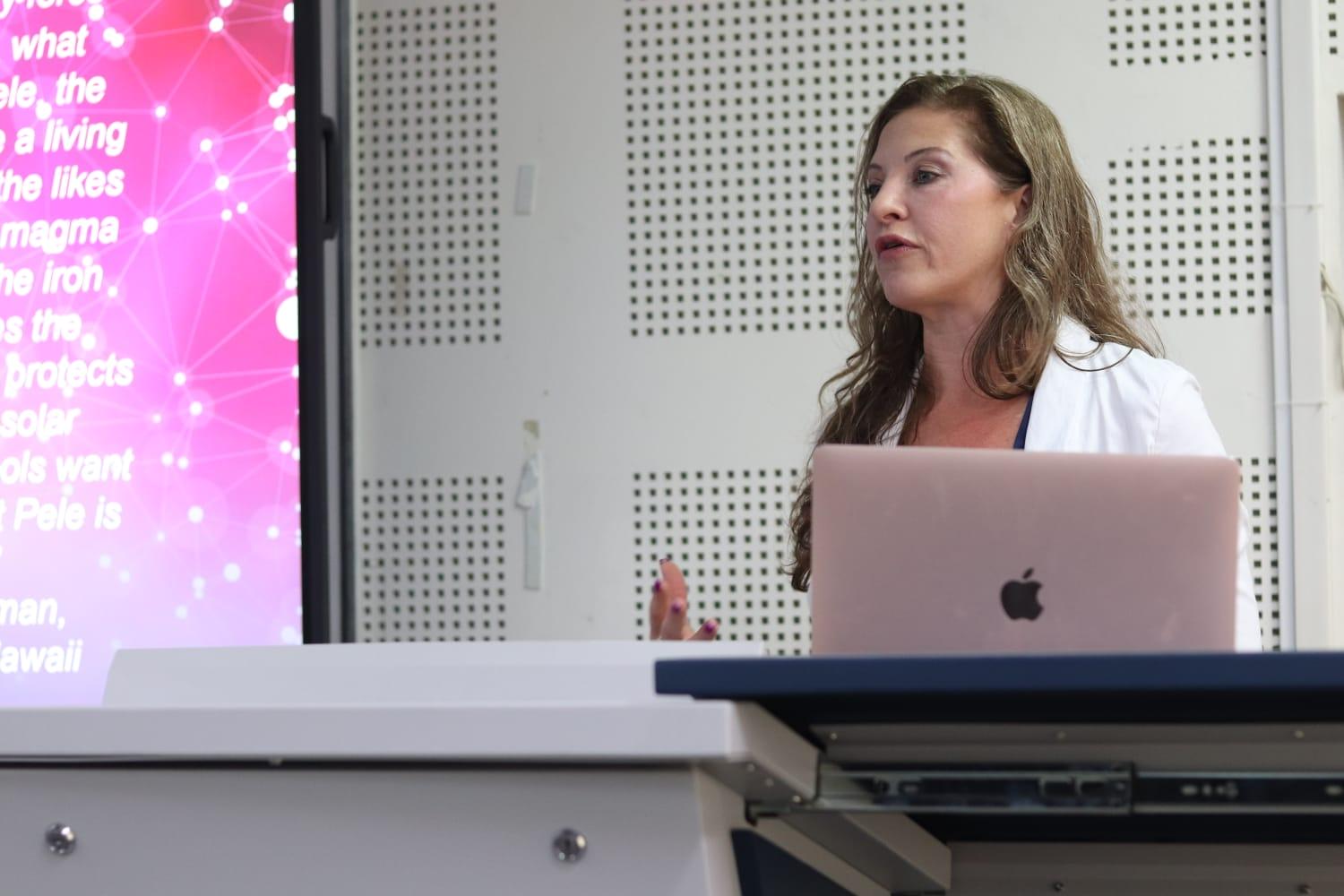
Janae Sholtz
Geophilosophy I, Earth as Artisan, Framing the Human
In this lecture, I ask the questions, “what conditions the human?” and “what role does the earth have in guiding cultural, social, and economic production?” To think about the cosmic and the earth as that which frames the human, I introduced the example of the Vredefort meteor impact, the oldest and largest meteor impact on the planet located just outside of Johannesburg South Africa. The first section of the presentation was an analysis and explication of the fundamental principles of geophilosophy as a methodology that is both cartographic, a matter of tracing the relations out of which we are composed to understand the set of potentialities available to us, and diagrammatic, a matter of discerning the unrealized potentials of different milieus to create new assemblages that cede some space for those artisanal events that exceed our anthropocentric machinations. The second section of the presentation was the application of geophilosophy to Vredefort, in order to understand how to connect the rise of empires, economies, and human histories to the contingencies of the cosmic and the movements of the earth. By using geophilosophy as a methodology, we were able to see the way that different levels of stratification, from geological events, to economic systems and social concepts of race and power, lead to the intersection of the gold mining industries of South Africa with apartheid and various political upheavals.
Geophilosophy II, Cosmic Consciousness, Reframing the Human
The second lecture shifts focus to the question of how to create a new image of thought that remains true to the earth. This lecture focused on several conceptual personas given through the work of Deleuze and Guattari,to tease out a new image of thought that remains open to the vacillations of the earth. The first is that of the itinerate wanderer, a way of being that translates to thinking as a kind of following and nuanced observation of the flows and disruptions of earth and territories. The second is that of the metallurgist and miners, who learn the inner workings of rock and earth, drill and bore into the earth as a profession and also deal with the societal demands for ore and mineral deposits. Deleuze and Guattari use these figures as examples of a way of thinking that are rooted in the materiality of the earth and sensitive to the political and economic conditions of human power structures. The miners’ way of engaging the strata, following the flows of the earth, is a model for the transitional beings that we must become - beings who discover a new way to be intimate with the earth and our material surroundings. Likewise, the subterraneanism of the miner must inspire us to the subterraneanness of thought – to constantly move beyond thought’s stagnation, towards the virtual unthought. The last section derives an affective comportment towards the earth which can be taken up to enhance our ethico-political engagements. It is an affective attunement that enhances and perpetuates our engagement with our own limits, joyously, while, at the same time, identifying and exposing the exploitation upon which our empires have been formed, the allegiances, the compromises, and the way that capitalism and state render many invisible or unworthy.
Christos Marneros
The Ways of Becoming
The Deleuzian notion of becoming is something that ‘resists’ its subjection to a particular ‘fixed’
identity. The difficulty of thinking, let alone writing about, becoming, as we stated, lies in the fact
that once we ask the question ‘what is a becoming?’ we automatically lose its core sense and most
likely all we can then do is turn to just another way of defining a subject (though this time as the
being of a becoming); and this in a way whereby its identity still takes precedent from its
experience, and thus acts as yet another concrete ‘ground.’
On the other hand, an examination of the notion of becoming remains paramount and it has to
be thought as, in our view, it is a way of, potentially, suspending or disorienting this primacy of the
unified subject and, to that extent, of the human rights framework and their western mode of
thought, in general. The question of becoming is from the start ethical and political in its nature. The
ethical plane corresponds to the question, ‘how may we (re)shape our modes of existing differently
on the condition that we start ‘taking becoming(s) seriously?’ In other words, how can our starting
point be the living experience of the subject rather than a preconceived universal subjectivity that
only acts at best as an aspiration for the vast majority of the planetary population? The political
place which is of course closely interconnected to the ethical, asks ‘how may these new ways of
existing lead to a formation of ‘a new politics?’